Editor’s note: This story has been updated to correct the name of the president in power during the Rodney King riots in Los Angeles.
President Donald Trump’s decision to deploy National Guard troops to quell immigration protests in Los Angeles, bypassing California Governor Gavin Newsom in the process, is irregular, but not without precedent.
The National Guard is a unique part of the U.S. military in that it answers to both governors and the president, who can call on its ranks to help in times of domestic emergencies, overseas combat, natural disasters, and more.
On rare occasions, presidents have invoked an 18th-century wartime law called the Insurrection Act, which is the main legal mechanism that a president can use to activate the military or National Guard during times of rebellion or unrest. Other times, they relied on a similar federal law that allows the president to federalize National Guard troops under certain circumstances, which is what Trump did on Saturday.
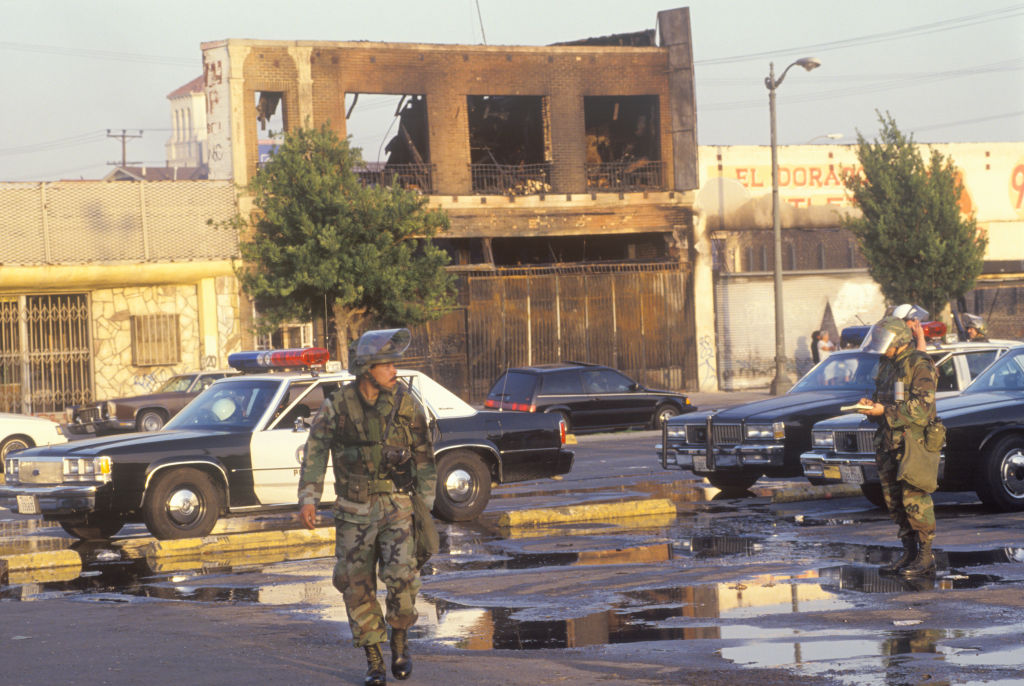
In 1992, President George W. Bush used the Insurrection Act to call in the National Guard after deadly rioting broke out in Los Angeles following the beating of Rodney King.
In 1965, the National Guard was sent in to end the Watts protests that were fueled by anger over police force abuses and a lack of community resources.
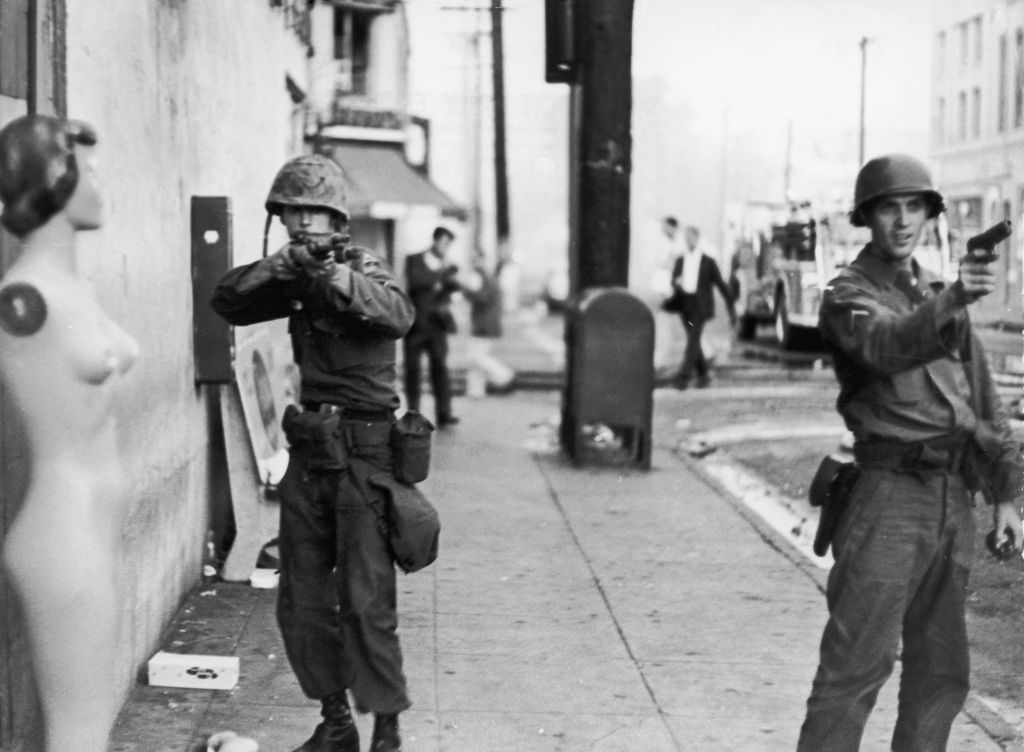
More than 30 people were killed, two-thirds of whom were shot by police or National Guard troops.
Most recently, Gov. Newsom deployed roughly 8,000 National Guard troops to quell protests over racial injustice inspired by the death of George Floyd in Minnesota. Well over half of the troops deployed in California were sent to Los Angeles County, where police arrested more than 3,000 people.
Very rarely, however, does a president call on the National Guard against the wishes of a state’s top officials.
The last time the National Guard was activated without a governor’s permission was in 1965, when President Lyndon B. Johnson sent troops to protect a civil rights march in Alabama, according to the Brennan Center for Justice.
In a directive Saturday, Trump invoked a legal provision allowing him to deploy federal service members when there is ”a rebellion or danger of a rebellion against the authority of the Government of the United States.”
Newsom threatens lawsuit
Newsom, who called Trump’s deployment “a serious breach of state sovereignty,” said he plans to sue the administration.
“This is exactly what Donald Trump wanted. He flamed the fires and illegally acted to federalize the National Guard,” Newsom, a Democrat, wrote in the post.
U.S. officials said about 1,000 National Guard members were in the city under federal orders by midday Monday to respond to immigration protests. The full 2,000 members authorized by President Trump were expected to be on the ground by the end of the day. The officials spoke to the Associated Press on condition of anonymity to discuss the details of military operations.
Trump has called the deployment a “great decision” that was necessary to regain order in the city.
On Monday, Trump appeared to endorse the arrest of Newsom. Newsom has publicly criticized “border czar” Tom Homan over the country’s deportation policy under Trump, going so far as to challenge Homan to arrest him.
“I would do it if I were Tom,” Trump replied.
The Associated Press contributed to this report.