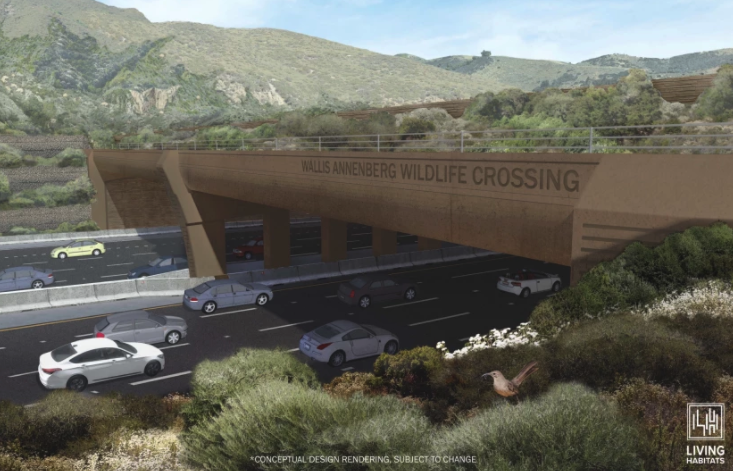
The Wallis Annenberg Wildlife Crossing over the 101 Freeway near Agoura Hills is on track to open by “early 2026,” according to a news release from California Gov. Gavin Newsom.
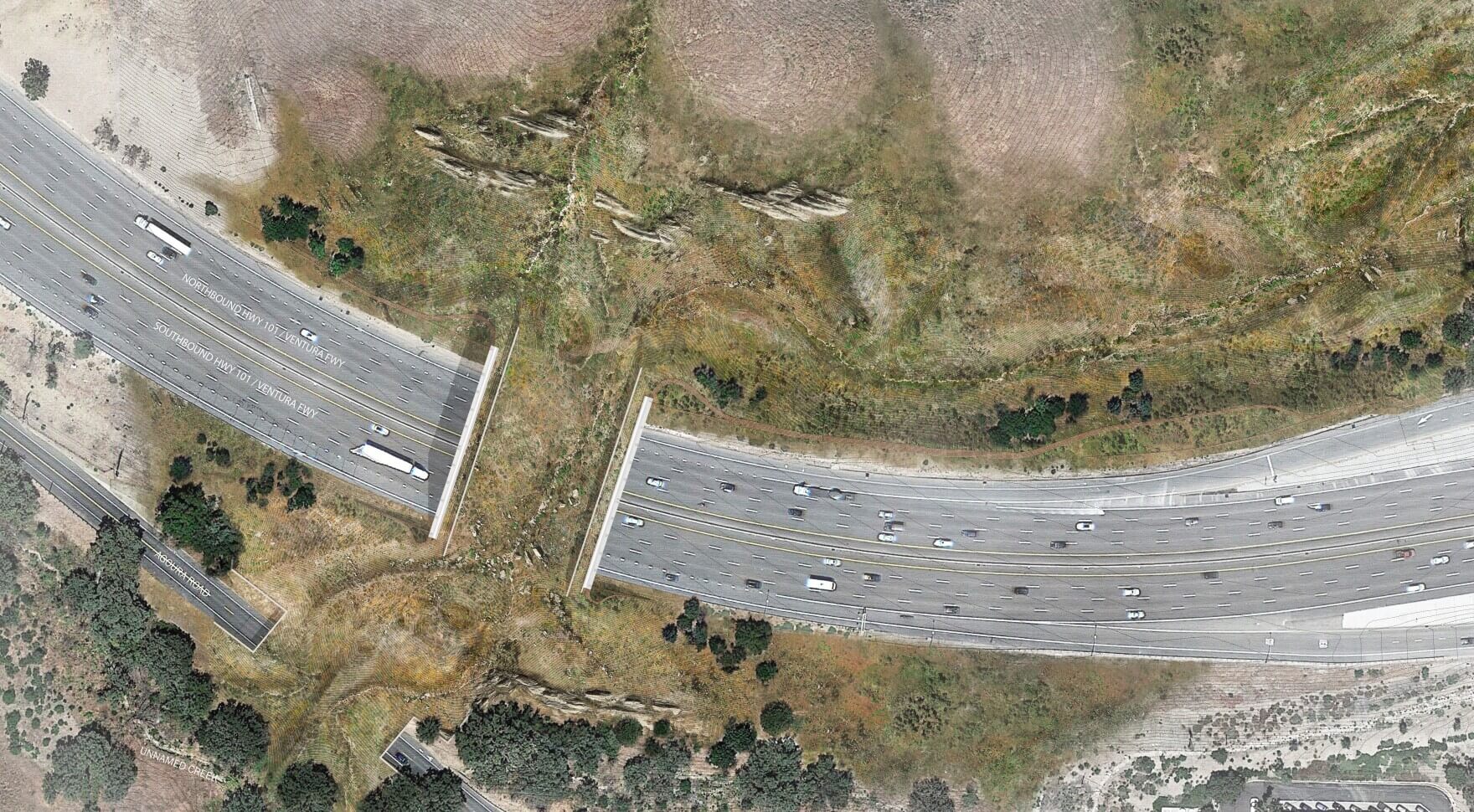
The crossing is located near Liberty Canyon Road and will be the largest wildlife crossing ever constructed, stretching over 200 feet long and 165 feet wide across the roadway.
The purpose of the wildlife crossing is to connect two natural landscapes that have long been bisected by one of the nation’s busiest highways.
“This wildlife crossing is just one example of how California is building infrastructure that connects rather than divides,” Newsom said in a Tuesday news release. “With projects like this, we’re reconnecting and restoring habitats so future generations can continue to enjoy California’s unmatched natural beauty.”
The project, according to the Governor’s Office, is now more than halfway complete.
The construction of the Wallis Annenberg Wildlife Crossing has been in the works in various forms for years. A groundbreaking was held in spring 2022, but officials say more than 30 years of conservation work has gone into the preparations to connect the critical protected lands in the Santa Monica Mountains and the Sierra Madre Range.
In recent years, public interest increased dramatically thanks to the presence of the beloved mountain lion P-22, who symbolized the plight of animals who found themselves trapped on all sides by urban sprawl.
It’s funded through a public-private sponsorship, with $34 million in funding provided by donors, while the state put forward more than $58 million. The price tag for the project was originally estimated to be more than $90 million.
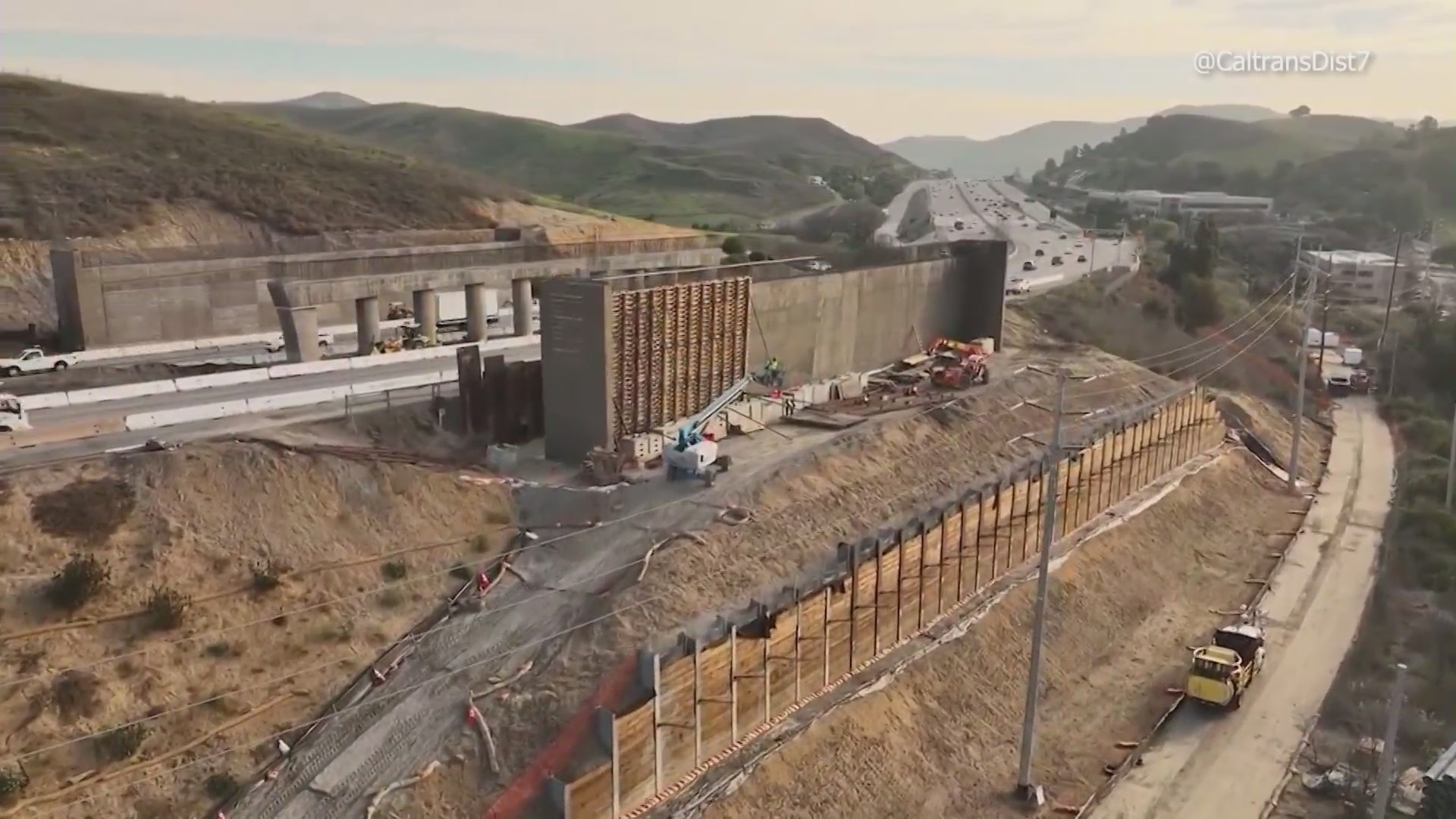
Just last month, the first of 82 concrete beams were put in place over the busy freeway.
Newsom says the continuing progress and the current completion timeline represent his administration’s efforts to streamline and reduce hurdles that have slowed down critical infrastructure projects in the past.
“Our work to build more, faster is already paying dividends across our state,” Newsom said.
In addition to reconnecting the natural habitats and reducing wildlife collisions with vehicles, the state hopes the project will help educate millions of Californians who drive under it.
California has a current goal to conserve 30% of the state’s lands and coastal waters by 2030, which officials say will ensure wildlife can move across protected habitats more easily, allowing them to find shelter, food and water without human interference.
In September 2022, Newsom signed legislation to require the state to identify locations where animals face barriers that separate them from moving freely and prioritize building or converting existing infrastructure to allow them to cross more safely.
For more information on the Wallis Annenberg Wildlife Crossing, click here.