A combination of unique weather conditions created the perfect “environmental recipe” for the Mountain Fire to spread quickly in Ventura County, destroying a still-undetermined number of homes, incident commanders said at a news briefing Thursday morning.
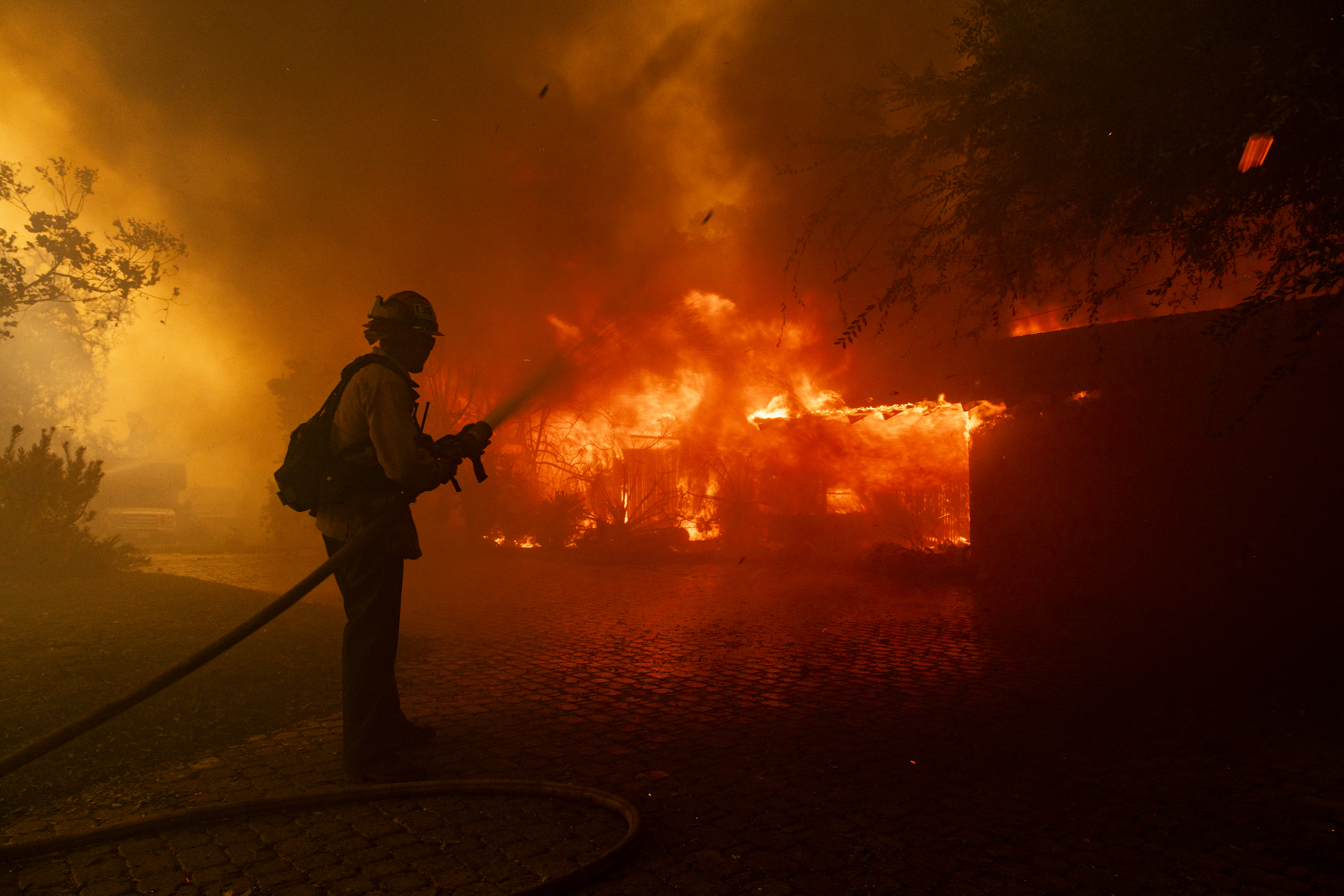
The fire broke out around 9:30 a.m. Wednesday near Balcom Canyon Road and Bradley Road, just north of State Route 118. What was initially reported as a 50-acre brush fire rapidly turned into a full-blown wildfire that raced through agricultural areas and neighborhoods in Somis and Camarillo Heights.
At a news conference in Ventura Thursday morning, officials didn’t update the acreage of the fire – still 14,500 acres based on the most recent mapping. They did, however, share additional insight into the factors that combined to produce such a devastating blaze.
“We know we’re coming off of two years of above-average rainfall, which gives us a very robust grass component,” said Los Angeles County Assistant Fire Chief Drew Smith. “Those fine fuels that are receptive to warm, dry [conditions] support the right recipe to promote large fire growth when we have high winds.”
Officials said there was still no containment on the fire as of Thursday morning. Ten damage assessment teams were being deployed to determine the number of homes destroyed. Roughly 10,000 people remain under evacuation orders.
“We will repopulate as soon as possible, but we have not begun that process yet,” said Ventura County Sheriff Jim Fryhoff.
According to Rich Thompson with the National Weather Service, winds were expected to calm by Thursday evening and overnight into Friday, giving firefighters the ability to deploy more aerial resources.
Adding to the challenges of containing the massive blaze, officials said fire crews are dealing with a challenging landscape with many hillslopes, along with a limited supply of water on the ground.
“Our water resources were prepared, they were ready,” said Ventura County Fire Chief Dustin Gardner. “We did run out of the water last night … Running out of water — I don’t want to say it’s abnormal, but it’s normal enough we plan for it. So it’s impactful, but it will be mitigated.”