Days after conservative influencer and activist Charlie Kirk was shot and killed in broad daylight while speaking at a Utah university, questions still remain about his killer’s motive for targeting the Turning Point USA co-founder and president.
Tyler Robinson, the alleged gunman who was formally charged Tuesday, has reportedly been uncooperative with investigators trying to piece together what happened leading up to the high-profile assassination of the most prominent leader of the young conservative movement.
While his motive remains unclear, federal investigators have confirmed that bullet casings recovered from the scene included engravings that reference a popular online satirical video game, an Italian anti-fascist anthem, and memes from deep corners of the internet.
Photos of the engravings haven’t been released, however, some analysts and left-leaning partisans initially speculated that they were linked to white nationalist personality and influencer Nick Fuentes and his legion of dedicated followers known as “Groypers.” Others have pushed back on that assertion.
Robinson, who was raised in a conservative household, has not been confirmed as a supporter of the far-right movement. Some conservatives speculate that he was influenced by leftist politics during college or by his roommate—whom Utah’s governor claims was Robinson’s transgender partner.
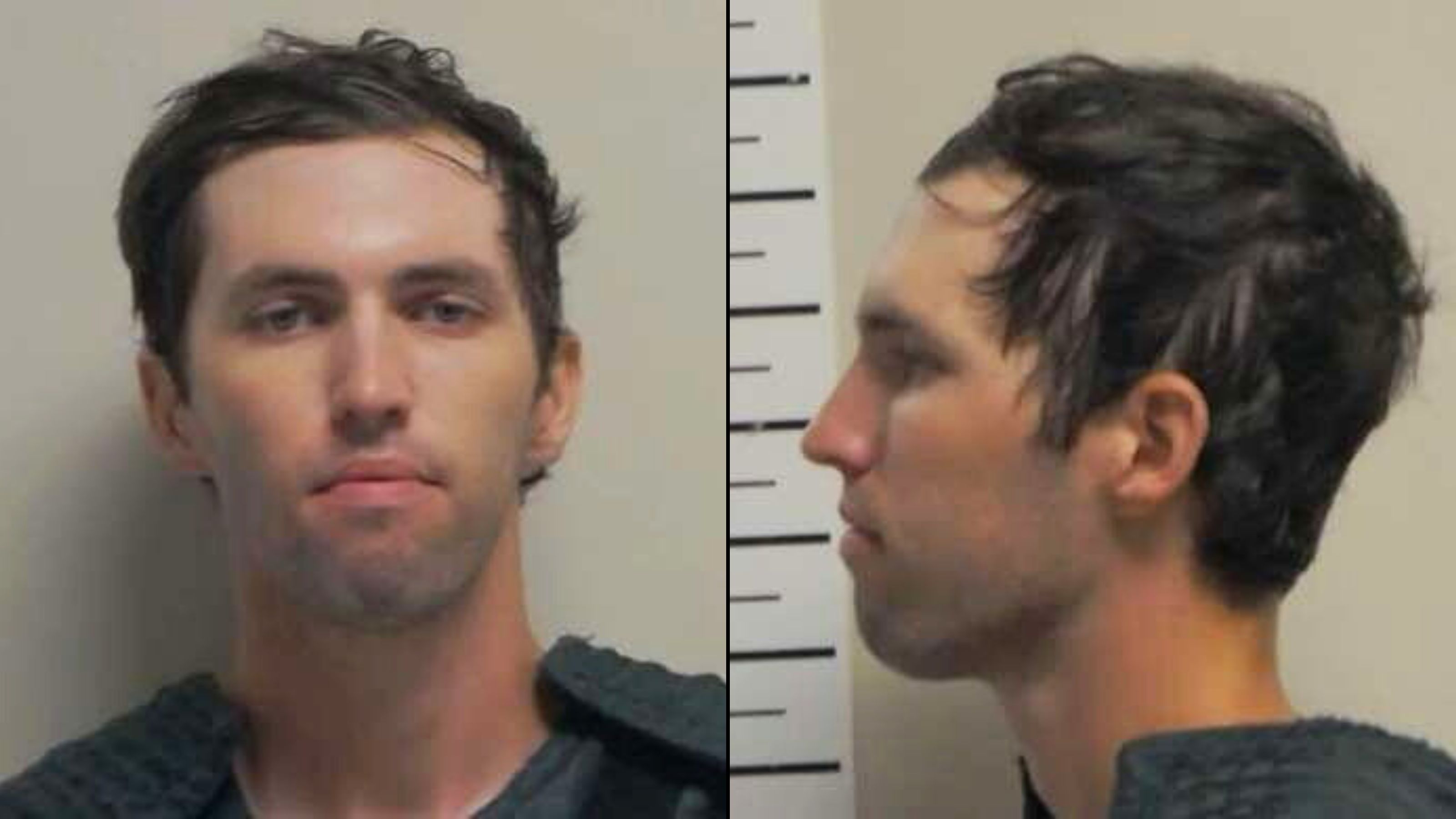
Gov. Spencer Cox (R) told NBC’s Meet the Press that the unnamed roommate was transitioning from a man to a woman, and noted that they have been “very cooperative” with authorities.
Fuentes reacts
Fuentes publicly condemned the assassination of Charlie Kirk within an hour of the shooting.
“This feels like a nightmare. One of the most horrific things I’ve ever seen,” he posted on X. “I feel absolutely gutted and devastated. Pray for Charlie Kirk’s soul, his young family, and for our country. The violence and hatred has to stop. Our country needs Christ now more than ever.”
Later, Fuentes accused “the Left” of falsely linking the Groyper movement to the killing.
“My followers and I are currently being framed for the murder of Charlie Kirk by the mainstream media based on literally zero evidence,” he wrote. “After the Left gunned him down, they celebrated and justified it. They said I was next. Now they are blaming me. These people are pure evil.”
On his Rumble show Thursday, Fuentes addressed his followers directly, warning that any retaliatory violence would be condemned. He said anyone who “takes up arms” in response would be “disavowed” and “disowned.”
Nevertheless, confusion and interest in the Groyper movement, itself a co-opted term from an alt-right meme, as well as its leader, has been piqued, according to search data from Google.
The ‘turf war’ for influence
Ramesh Srinivasan is a professor of information studies at UCLA, and an expert in the field of technology, social media and how it intersects with culture and politics.
He describes Fuentes and his followers as holding and espousing white supremacist and white nationalist ideals. It’s a message that Srinivasan says is communicated and distributed by Fuentes with frightening efficiency and precision.
“They tend to leverage online worlds and platforms very well, both in terms of putting out incredibly inflammatory content, content that some may deem as hateful and inappropriate, and that is the kind of content that tends to go viral online,” Srinivasan told KTLA in a phone interview Monday. “I also see them as an organization that has used various parts of the internet where you can communicate and organize in sort of spaces that are a little more anonymous or underground.”
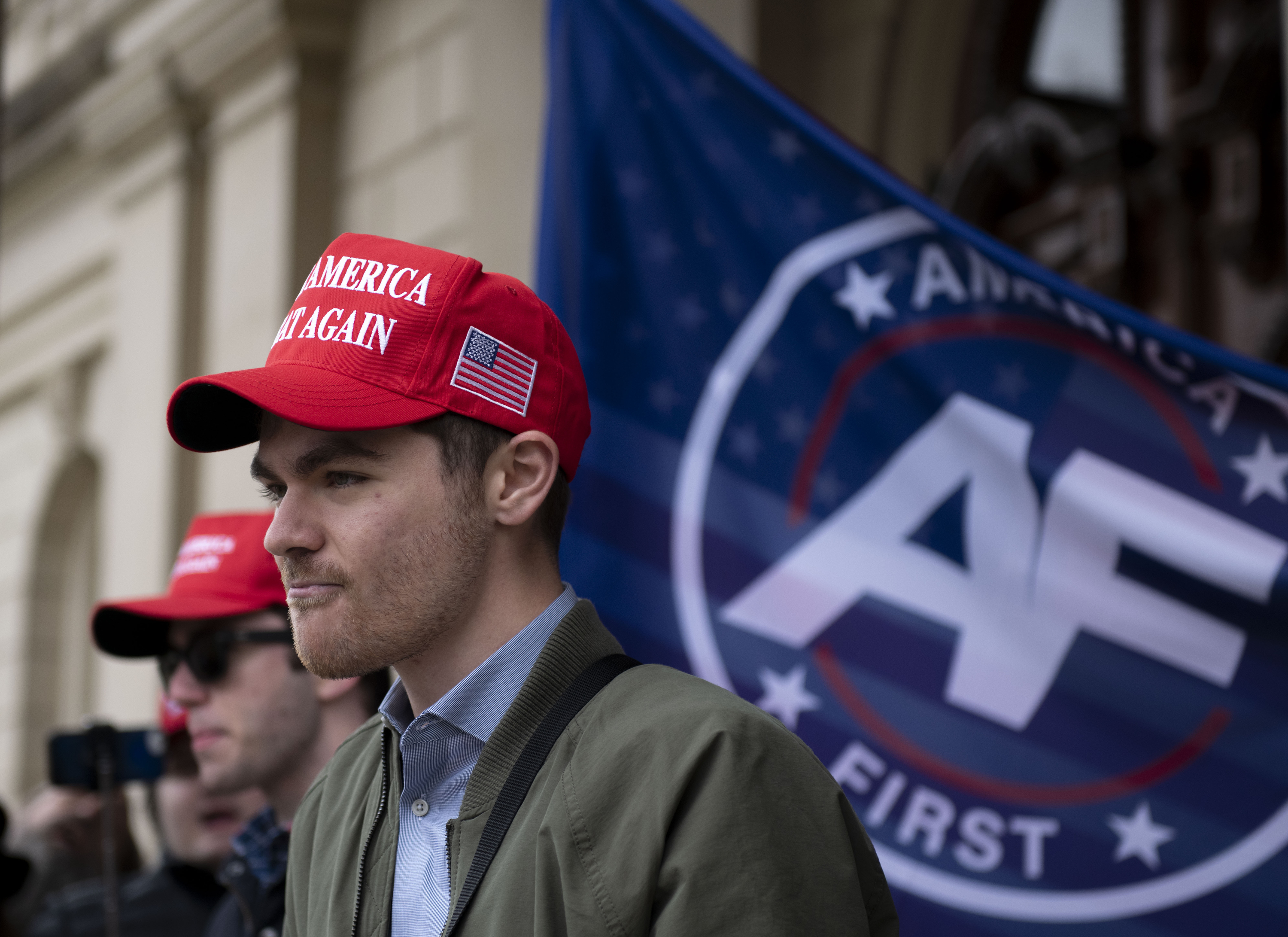
He says that traditionally speaking, Groypers would’ve been seen as members of a fringe ideology found mostly in small, tight-knit online communities like 4chan and Reddit. But now, in 2025, Srinivasan says they are “hugely influential” in modern conservative politics.
Fuentes, alongside rapper Kanye West, famously dined with private citizen Donald Trump at his Mar-a-Lago resort in 2022, two years prior to his eventual election to a second term in the White House. He has thousands of followers on social media and a wide range of listeners and viewers of his programs.
Charlie Kirk’s relationship with Nick Fuentes involved not only ideological difference but also public feuding.
“It’s my understanding that there were turf wars over who gets to whisper in the President’s ear,” Srinivasan said. “[Charlie] was not just a rising star, he was already a huge star online, and in terms of, not just organizing online and on campuses, but also having a huge influence on the President and the President’s election.”
He says the Groyper movement may have a vested interest in elevating Fuentes’ incendiary and divisive politics further into the mainstream space previously occupied by Kirk and Turning Point.

Srinivasan is a regular contributor to “the Young Turks” political talk show, was a supporter of Bernie Sanders’ presidential bids, and is about as diametrically opposed as possible to both Fuentes and Kirk. But Kirk, he says, presented himself as more “agreeable,” and digestible to a mainstream audience and, ultimately, closer to the White House.
Less than two weeks before Kirk was shot and killed in Orem, Utah, Fuentes challenged Kirk to debate him, something he said the latter had repeatedly refused. He also accused Kirk of gradually moving “a degree” closer to Fuentes’ far-right beliefs, saying he’s “impregnated” Turning Point and infiltrated Kirk’s organization without his consent.
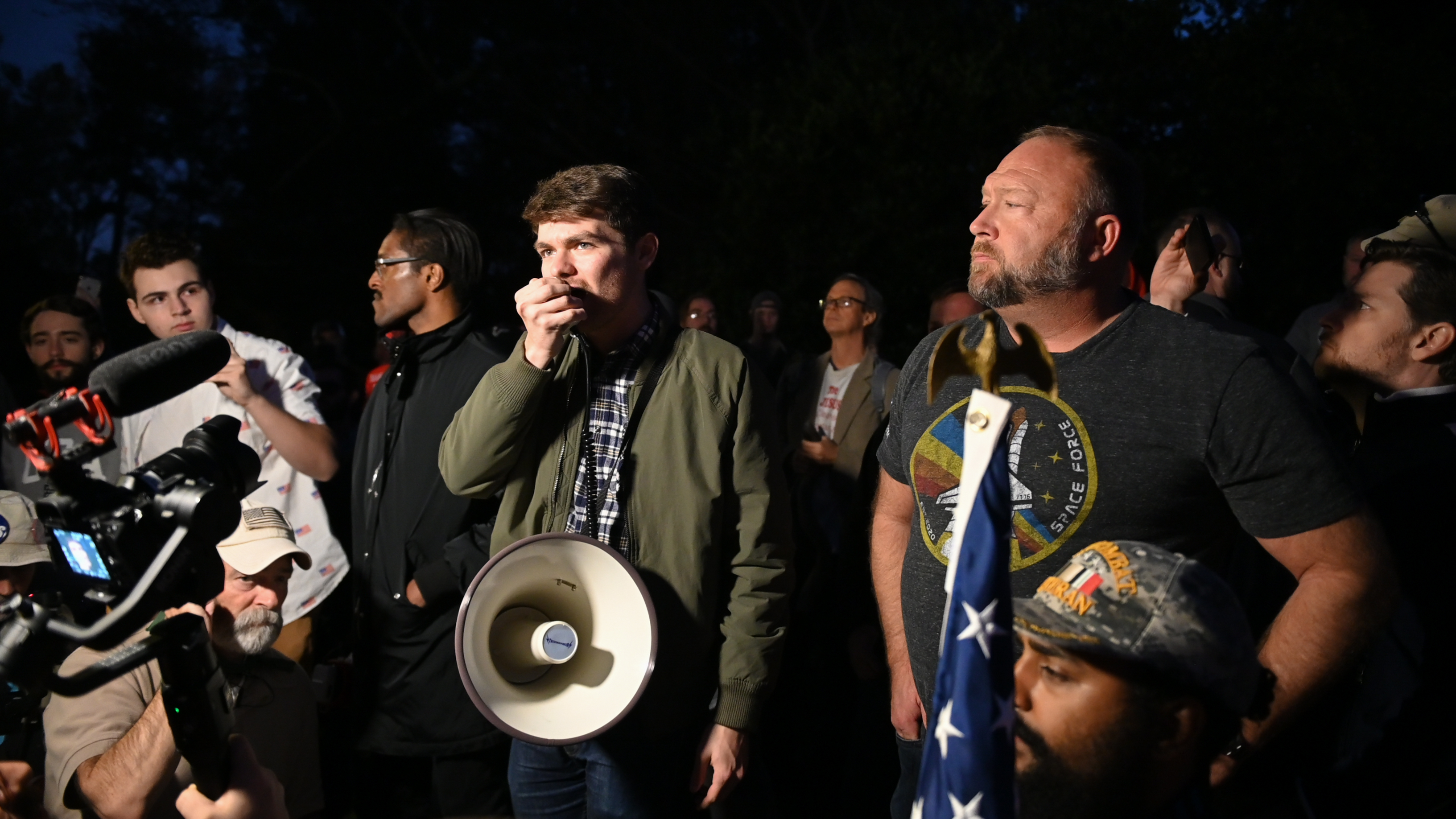
Why young people gravitate toward hateful rhetoric
In addition to embracing far-right politics, both Kirk and Fuentes shared another common denominator: growing popularity among young people, especially young men.
Srinivasan says data shows clearly that the current generation of young adults face disadvantages never seen in the nation’s history. They’re the first generation to make less than their parents; life expectancy has declined over the last decade; many jobs are being lost to the gig economy and, potentially, artificial intelligence.
“It’s not surprising that those who can—skillfully online in particular—play to affect anger, a feeling of alienation, and kind of point their thumb at the ‘elites,'” he said. “Then you have the kind of magnetism and appeal of people like Nick Fuentes, of people like Charlie Kirk too, [who say], ‘let’s get back to basics: Everything is being stolen from us, stolen by immigrants, stolen by transgender people, even stolen by our so called woke progressive folks.'”
“It just plays to people who feel like things are wrong, including younger people who feel like it’s a raw deal,” Srinivasan said.
‘How hardcore you can get’
Nick Fuentes is widely viewed as one of the nation’s most prominent white supremacists and Holocaust deniers. His views have led to him to be banned at some of the most prominent right-wing conventions, including events hosted by Turning Point.
He’s been banned on several social media sites, participated in the deadly Unite the Right rally in Charlottesville, Virginia, and was present at the Jan. 6 storming of the Capitol.
Srinivasan said the “turf war” between two factions on the right and the far-right is likely the result of an attempt to push mainstream conservatism further and further into the extreme.
“I think that the goal is to get to figure out how hardcore you can get in terms of putting positions out there that grab people’s attention and not lose people,” he said. “More extreme positions tend to just capture more attention … it’s sort of a rabbit hole of who can who can be more viral, who can be more provocative, who can grab more attention. And attention-seeking content, whether it’s true or not, or whether it’s kind or not, or polite or not, is what takes over the internet and becomes primarily what we end up seeing.”
After Trump won the presidency in 2024, Fuentes made national headlines for tweeting “Your body my choice,” in an attempt to rage-bait and troll women and pro-choice supporters.
Social media and extremism
Srinivasan grew up in the Silicon Valley. He’s an engineer by discipline and an expert in automation, algorithms and how technology shapes our society.
He says technology and social media plays a massive role in how one person might view the world versus the other. Someone living a few doors down could be living in a completely different reality based on what their social media algorithms present them.
“If our windows to the wider world and our wider country are stuck on social media, we’re not really looking at the real world, and we’re not looking at one another. We’re just being exposed and pummeled by extreme content.”
And tech companies have done little to nothing to regulate or fix it.
This, he says, is “disastrous” for American democracy.
“Content is only visible when it’s viral, generally, and that which is more viral tends to be content that’s predicted computationally and algorithmically to grab people’s attention,” Srinivasan said. “There’s a reason why, in a world where people don’t trust almost anybody or anything, someone like Nick Fuentes can rise to the top.”
In general, virality equals influence.
Influence equals power.
The oversized reach of someone with extreme, hateful ideals can, in effect, silence others by being louder and drowning them out.
“Democracy is not just about all of us having votes. It’s about dialog, and it’s about the ability to have some common basis of understanding.”