A multibillion-dollar plan to renovate and modernize Los Angeles Union Station took a crucial first step last week.
On Dec. 21, construction crews began the process of demolishing an existing building to make way for the expansion of Southern California’s historic transit hub, which will undergo massive and ambitious changes in the coming years.
During a one-day closure in downtown L.A., crews installed traffic control barriers and began the initial prep work for the demolition of a former self-storage facility located on the 800 block of East Commercial Street.
Demolition of the building will begin in January and will take about six months to complete, according to an LA Metro memo.
Saturday’s work was the first material development in the Link Union Station Project, which involves retooling the existing train platforms into a “run-through” configuration, as well as the construction of a massive bridge that spans the width of the 101 Freeway.
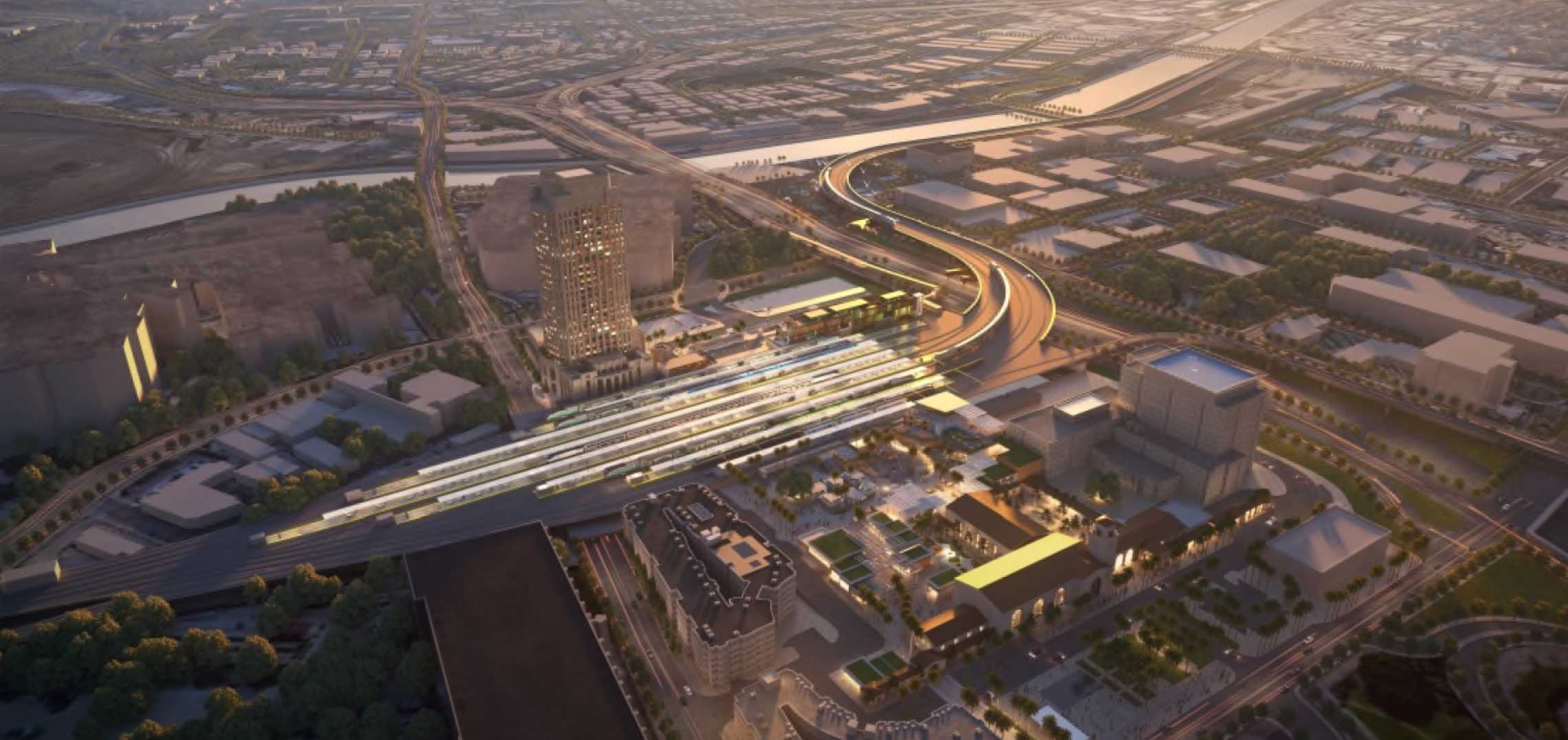
The Link Union Station project aims to revamp the train and bus depot to improve existing passenger rail service and future-proof it for new service and increased capacity in the coming decades.
Originally built in 1939, Union Station is set to become one of the primary transit centers for the California High-Speed Rail when that service eventually reaches downtown Los Angeles. High-speed trains, in addition to Metrolink and Amtrak, would go in and out of Union Station using the new bridge over the 101 Freeway, known as the US-101 Viaduct.
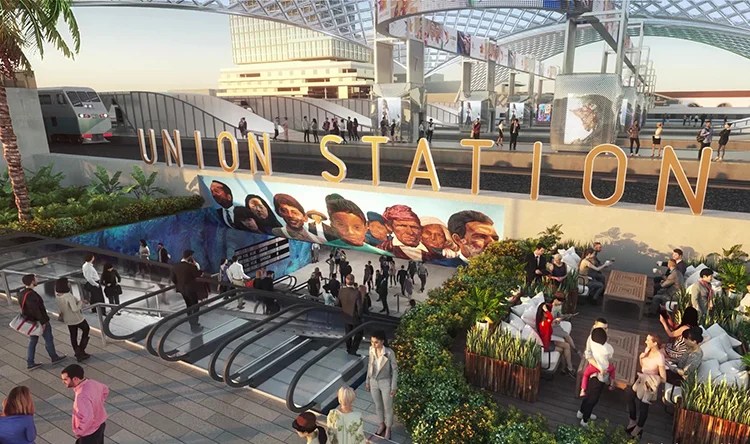
Renderings of the Link US improvement project show an upgraded and modernized Los Angeles Union Station with improvements for pedestrians and passengers. (LA Metro via HDR Inc.) 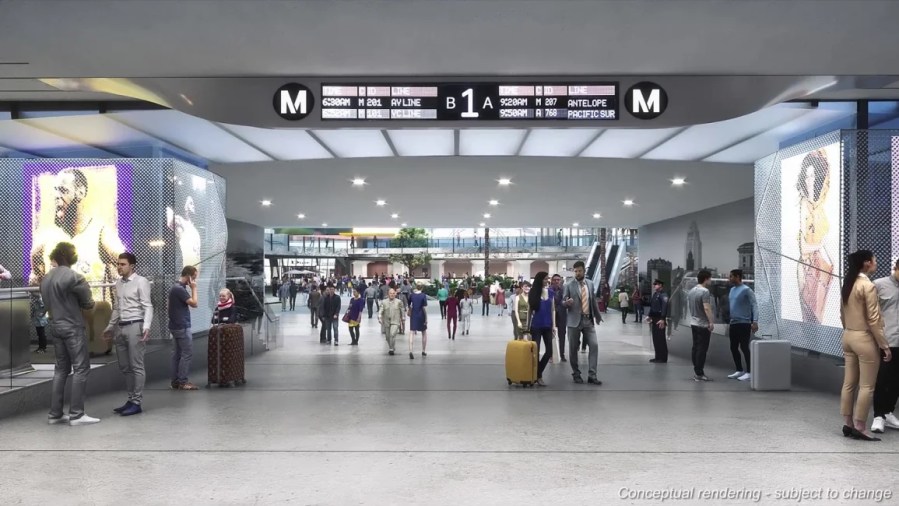
Renderings of the Link US improvement project show an upgraded and modernized Los Angeles Union Station with improvements for pedestrians and passengers. (LA Metro via HDR Inc.) 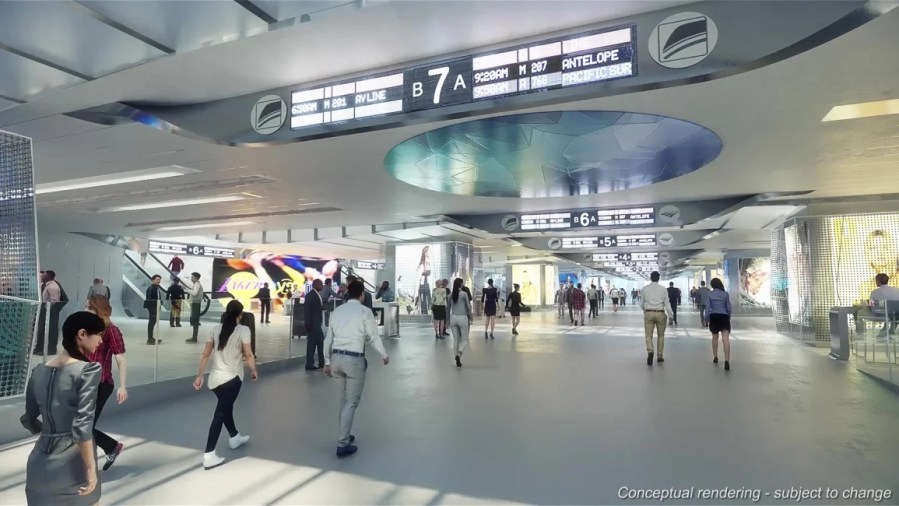
Renderings of the Link US improvement project show an upgraded and modernized Los Angeles Union Station with improvements for pedestrians and passengers. (LA Metro via HDR Inc.)
In addition to the new bridge and the reconfiguring of train platforms, other improvements under Link US include new tracks to connect to an elevated rail yard, improvements to the concourse, and new communication, signaling and safety systems.
But first, crews will need to clear space for construction to begin in earnest, and that includes demolishing the former storage facility. That work will commence in January and is anticipated to take place Monday through Friday from 7 a.m. to 4 p.m., weather permitting. Some work will require weekend shifts, LA Metro officials said.
The California High-Speed Rail Authority is a co-sponsor of the project and is helping to fund the improvements.