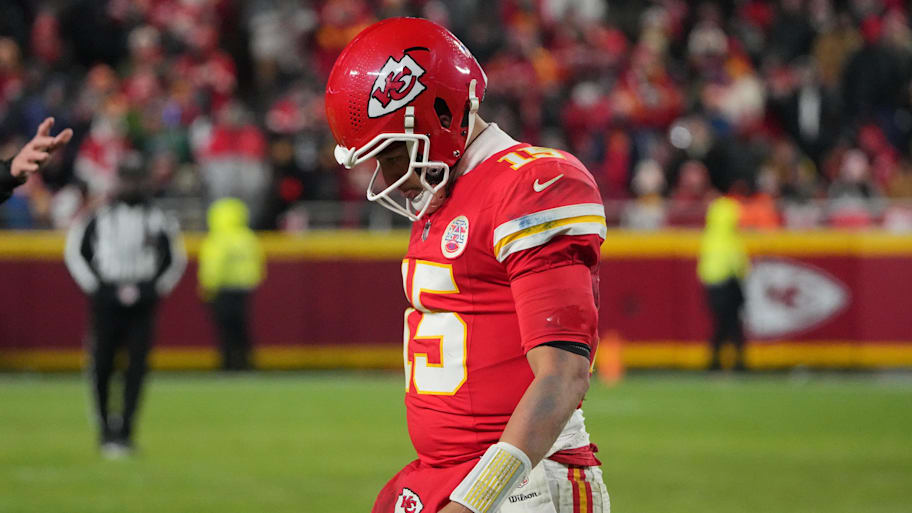
Just like the weather outside, things have become frightful for three AFC teams with, it seems, some issues at the game’s most important position. Let’s examine.
The end of the line for the Chiefs
It was jarring to hear that this is the first season in 11 years where the Chiefs will not be in the NFL’s postseason. Their mark of 10 consecutive appearances is the second-longest streak in league history, behind only the 2009 to ’19 Patriots. The Chiefs just lost yet another close game on their home field, this time to the Chargers, and, to add injury to insult, saw Patrick Mahomes tear his ACL at the very moment their playoff aspirations ended.
The Chiefs’ plight illustrates the razor-thin margins between success and failure in the NFL. So many games are won and lost in the most fortunate way for one team and in the most grueling way for another team. And it snowballs. I remember one year when I worked for the Packers when we were the beneficiary of a late muffed punt in one and a late tipped interception in another game, both early in the season, and it seemed the rest of the season went that way all year long. We won games we shouldn’t have won; we had fortune on our side.
When coaches and evaluators talk about “50-50 balls,” they are speaking of whether a receiver can “win” those plays where things could go either way. It is the same with games in the NFL. So many of the games are 50-50 games; last year, the Chiefs won those games, this year they lost them.
The Chiefs were exposed in last year’s Super Bowl, where the Eagles dominated them in every aspect. In watching the team over this year and last, my sense is there is not a lot of difference in who they play—pretty much the same personnel—or how they play. They are far removed from the high-flying offense they had with Tyreek Hill stretching defenses. They have been a middling offense with a tough defense for the past couple of years, both when they made the Super Bowl, and now when they missed the playoffs.
And from a business point of view, the future does not look bright. Mahomes carries a $78.2 million cap charge for next year, one that will obviously be restructured to push a large chunk of those cap charges into the future. They have the second-worst cap table in the league next year, better than only the Cowboys, and Travis Kelce’s future is uncertain. This could be the end of an era.
Having been around the NFL for decades, I was constantly reminded of the one overriding feature that the league prides itself on: competitive balance. It is baked into the system with the salary cap, draft, free agency restraints and equal revenue sharing, creating an atmosphere where bad teams can improve faster and good teams have a hard time staying good. While we didn’t make a Super Bowl in my decade in Green Bay, we won our division four times, which I am very proud to be a part of. I know how hard that sustained success was then, and is now; thus my continued admiration and fandom for the Packers. But at some point circumstances, fortune and the pull of competitive balance overtake teams. That happened to the Chiefs this year.
Burrow’s not going anywhere
Joe Burrow’s status as one of the best players in the NFL gives him both gravitas and some ability to say exactly what he feels in a candid and less sanitized manner than what we hear from other players. His comments lately have been, well, curious.
Beyond taking blame for his poor play, Burrow has talked about not having fun, making some wonder whether he will be playing for the Bengals after this season. Well, I am here to tell you, from a business of football point of view, he’s not going anywhere. Follow the money, and follow the team we are dealing with here.
The notoriously thrifty Bengals organization—they didn’t even clear the snow off the stadium seats Sunday—has paid Burrow $177 million over the past six years, $146 million in the past three years. They have him under contract for roughly $35 million, $37 million and $40 million over the next three years, a bargain price for a player like Burrow. This franchise, perhaps more than any other in the NFL, is not moving away from this asset and that value.
The Bengals have also signed Jamar Chase to the largest wide receiver contract in NFL history, averaging $42 million per year, and doubled down with a contract to wide receiver Tee Higgins at $28 million per year. These are not receivers to trust with anyone but the franchise quarterback they have under contract
There will be speculation about Burrow’s future. Ignore it, just as the Bengals will be doing.
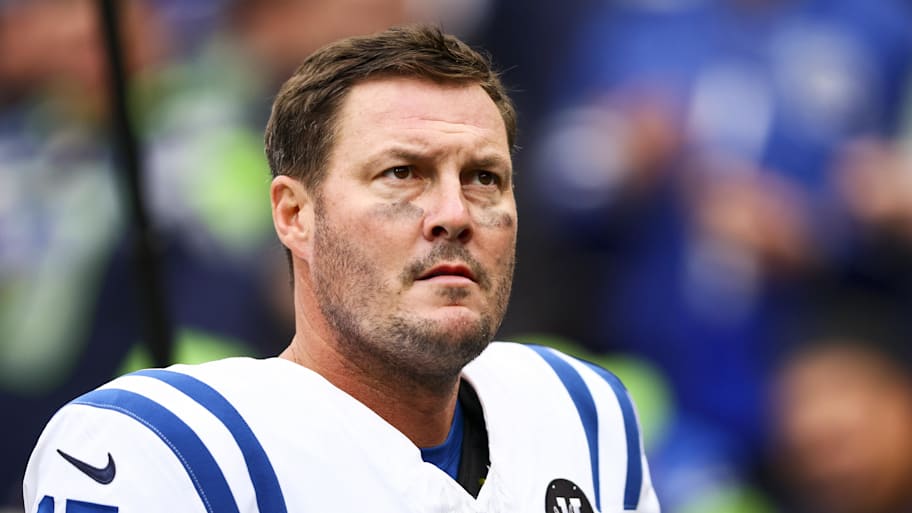
The Rivers (last) option
First, I feel for Daniel Jones, who was having a great season for the Colts before tearing his Achilles in Week 14. As I’ve said here before, I got to know Jones and his family in their agent selection process, and was impressed with them. Now the financial future of Jones and the future quarterback plan of the Colts are both complicated.
Of course, Jones would have never been a Colt but for what now appears to be a heavy swing and miss on the No. 4 pick of the 2023 draft, Anthony Richardson. He continues to be either injured or ineffective, and that has now set back the franchise.
As for Rivers, I understand that he can still sling it and has good knowledge of the Colts’ coaching staff and offense. But this decision stands out for the fact that the Colts had to go to Rivers above all other free-agent or practice squad quarterbacks out there. Was there not a better option than a 44-year-old grandfather who’s been retired for a couple of years?
As per the Colts, there was not. Alas, another example of the scarcity at the position and the reason these players, even those below the top tier, can make over $50 million a year.
One QB delivers, the other doesn't
It was not that long ago that two quarterbacks who were softly “holding in” during training camp agreed to four-year extensions (five-year total contracts) worth over $200 million. Those two quarterbacks—Jordan Love and Tua Tagovailoa—were represented by the same agency, Athletes First; they agreed to deals on the same day, July 30th, 2024, and had strikingly similar cash flow in their contracts. After two seasons on those deals, which will be completed in three weeks, Love will have made $92 million; Tua will have made $94 million.
I think we can safely say—whether you are a Packer fan or not—that one (Love) player has delivered a much greater return on investment than the other.
The Dolphins have now benched Tua for the rest of the season, raising questions about his future with the team in 2026 and beyond. My best guess is that, due to cap-killing consequences and guaranteed cash, he will be in Miami for the 2026 part, but not the “and beyond” part.
A lot of quarterbacks in recent years have received top-of-market deals, mostly justified by their abilities and scarcity. But of all those contracts—for players like Josh Allen, Patrick Mahomes, Joe Burrow, Justin Herbert, Jalen Hurts, etc.—the two where I said to myself “I probably wouldn’t have done that” are for Tua and Trevor Lawrence. Lawrence may be proving me wrong, we’ll see, but it now seems my eyebrow-raise was right about Tua.
The “going rate” for these deals is three years of full guarantees, followed by “we’ll see.” Tua has $54 million guaranteed next year; that and the Cap ramifications—in my opinion—will not allow for a release.
If Tua is released before June 1, 2026, the dead money Cap charge is a mind-boggling $99.2 million, which could be 35-40% of the Dolphins’ cap next year. I don’t see it happening. If the team releases Tua after June 1, they still take on a monstrous $67 million charge next year and a $32 million dead money charge in 2027. The bottom line is they made their bed with this contract, and now have to sleep in it.
I know, I know: I didn’t think the Eagles would take on a $34 million dead cap charge with Carson Wentz a few years ago. And I didn’t think the Broncos would take on an $83 million Cap charge—over two years—a couple of years ago. And I was wrong on both. But I don’t see it happening here; $99 million, even over two years, is a bridge too far, in my opinion.
This year, we had a $27 million backup in Atlanta (Kirk Cousins) and a $46 million backup in Cleveland (Deshaun Watson). Next year, we may see a $54 million backup in Miami.
More NFL From Sports Illustrated
- NFL Week 16 Picks From the MMQB Staff: Packers and Bears Clash for First Place
- Why Rams vs. Seahawks Is Incredibly Important for NFC Playoff Picture
- NFL Upset Predictions and Picks for Week 16 (Can Philip Rivers Lead Colts to Upset Win Over 49ers?)
- Tua Tagovailoa’s Long, Drawn-Out Decline Could Have Been Prevented
- Packers DC Lays Out Audacious Goal for Micah Parsons After ACL Injury
This article was originally published on www.si.com as Business of Football: End of Chiefs’ Run Is How the NFL Works.