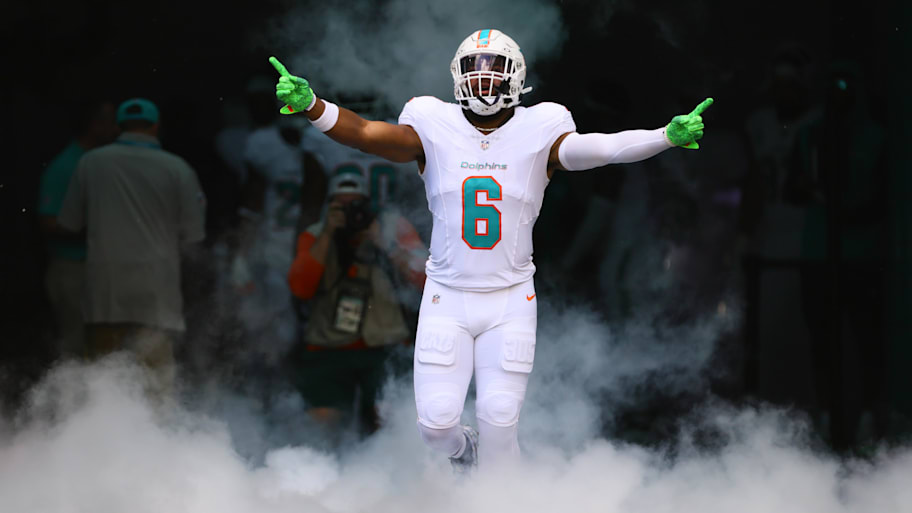
Nostalgia gifted Anthony Walker Jr. the inspiration he never knew he needed. In December of last year, after seven seasons spent at middle linebacker in Indianapolis and Cleveland, Walker had joined a new team. He didn’t choose Miami for the sun. He chose the Dolphins for what they represented—a chance to play professionally in the city where he fell for football.
During that 2024 season, the thought that would lead to arguably the best gift ever given to any NFL player by any NFL teammate struck. Walker hadn’t played at “home” since high school, where he starred at Monsignor Edward Pace. Walker decided to wear a different jersey to each home game, as he entered the stadium, each a replica of one a friend had worn back then. Reaction to this gesture outpaced Walker’s wildest expectations, which weren’t that wild to begin with.
For the holidays, he considered giving the other Dolphins’ linebackers their high school replica jerseys. But that didn’t feel grand enough. Walker, of course, knew a guy. This Guy made jerseys—replicas. Anything anyone could dream up. The linebacker rush ordered one for each teammate. And his (best kind) of Jersey Guy began toiling.
Walker created a list of Miami players, their individual high schools and their jersey sizes. Jersey Guy found the right colors. Designs were created: plain fabric, morphed into the one jersey most NFL players most covet.
This gesture—simple and yet not—floored Walker’s teammates. The intended effect hit the locker room, spread, proliferated across social media and became a thing. The gift—and the nostalgia each jersey evoked—landed Walker on The Today Show after he became a meme. “I didn’t know it would go viral for real,” Walker, now back with the Colts, told SI.
Amid a giving landscape across pro sports that now resembles an arms race, especially for NFL quarterbacks, the viral reaction to a team-wide gift from a middle linebacker in Miami proved—yes, proved—that the thought still counts.
The best reaction, Walker says, came from tight end Jonnu Smith—proud alum of West Port High in Ocala, Fla. Apparently, Smith had been trying to buy his high school jersey or find a Jersey Guy. He nearly broke down upon receipt.
For Smith, his teammate’s thoughtfulness meant that much.
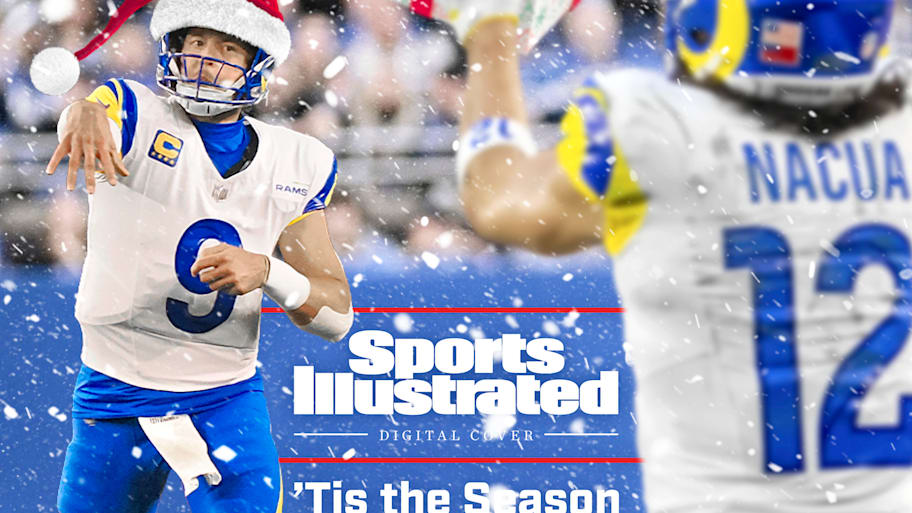
More: Read the 20 unwritten rules of NFL gift giving here.
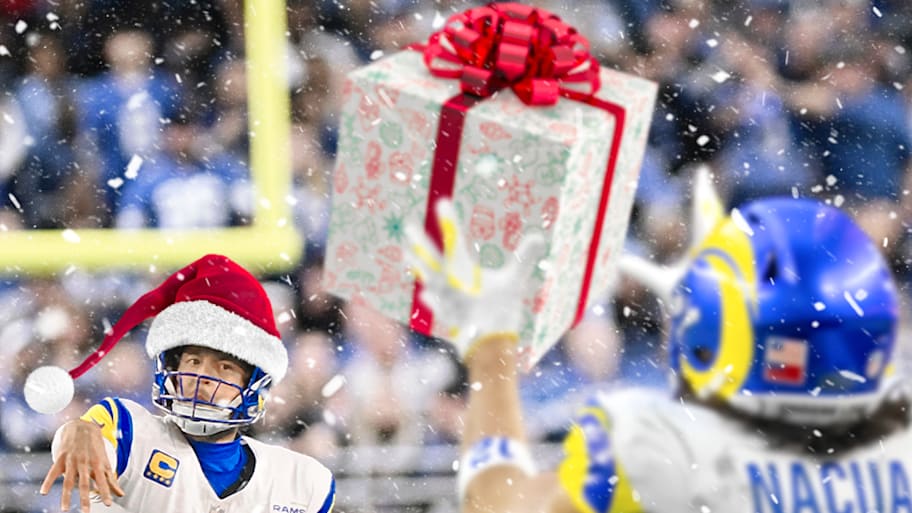
The evolution of NFL gift giving can be traced through a single career. Consider Rams quarterback Matthew Stafford pro football’s gift-giving equivalent to Kevin Bacon—17 seasons, hundreds of teammates, 17 rounds of ever-escalating gift purchases.
His rookie season (Detroit, 2009) marked the era when the price of gifts, always in lockstep with the value of contracts, ascended beyond levels the vast majority of sports fans found, frankly, absurd. Stafford accepted every increase. The cost went up. But so did his contract’s annual value. He helped feed his big hogs with Big Green Egg smokers. He fortified their bodies with cold-plunge tubs. And he got creative as time went by. One year, he bought each blocker 150 shares of an ETF (exchange-traded fund)—bonus points for diversification of assets, trading flexibility, lower costs and high tax efficiency!
Those who wanted cash could cash out. Those who could wait were encouraged to wait, as this gift would not keep growing so much as giving.
This practice is modern in nature. It doesn’t date back far in NFL history. According to reports, Packers coach Vince Lombardi gifted mink stoles to his players’ wives after Green Bay won the NFL championship in 1961. Other sites cite Joe Montana as an innovator in the gift-giving space. He reportedly gave linemen—and his offensive coordinator—Rolex watches in the late 1980s and/or early 1990s. Barry Sanders did that, too. Warren Moon paid for his offensive linemen to join him at Pro Bowls in Hawaii.
Then there’s Emmitt Smith. He reportedly placed toy Hummers next to the locker of each of Dallas’s O-line starters. All figured their real Hummers were parked outside. Smith laughed as he told them the gifts were remote-control versions and nothing more.
Such gift-giving tomfoolery wouldn’t pass muster for long. Best guess for when gift giving became a thing: 1980. That’s when John Wesley “Lam” Jones became the NFL’s first seven-figure player, his contract with the New York Jets worth $2.1 million over five seasons. Seven seasons later, Brian “The Boz” Bosworth inked a 10-year, $11-million deal with Seattle.
Around then, NFL gift giving began in a more widespread, expected fashion.
Many see the significant uptick, the second turning point to now, as starting in the mid-2000s. The most commonly cited “best” NFL gift of all time is when Tom Brady gave each starting O-lineman an Audi Q7—current price range $53,000-ish to over $85,000—after New England won every regular-season game in 2007. The 2010 season marked another significant increase, tied to salary bumps. Same for every season starting with 2018.
Keith Lipert is neither a retired NFL player nor a sports obsessive. Corporate giving is his expertise, his business—KeithLipertGallery.com—and his mission: to create “thoughtful and appropriate gifts” that “generate esteem and warmth.” To help clients, he uses Italian silversmiths, Peruvian box makers, American glassmakers and more. Those clients include presidents, heads of state, industry leaders and members of royal families. “It’s a niche within a niche,” says Lipert, on the phone from Washington, D.C.
Lipert had researched the landscape. He brought Walker’s jerseys up, immediately, unprompted. He saw the quarterbacks and their arms race and thought, “Gifting is really about showing respect and appreciation.” Those gifts, sponsored or not, picked out by the players or their reps, accomplished both.
“These acts of kindness,” Lipert says, “are really meaningful.” They’re given, for one. They’re free. They’re generous. And, in their messaging, they convey, well, respect and appreciation.
The best gifts, Lipert says, feature baked-in storytelling. Superstars who gift golf carts also signal that they want to play golf together. Gifts that start with what groups of people have in common, those anchor, Lipert says, memories. The significance of each present in this vein will outlast every career involved.
Professional football is a lucrative and shared experience. It’s also brutal, painful and public. Teams that bond more tend to win more. If gifts help any team bond, even nominally, then gifting becomes a (super minor) competitive advantage. “It’s the nature of the human condition,” Lipert says. “It’s better to give than to receive, right?”
Towering offensive linemen figure more prominently into NFL gift giving than into any celebration of any team’s success. This is why the largest players in pro football receive the largest gifts. In this holiday calculus, it’s funny—they are the “little people.” This is also the only time that offensive linemen become the type of player all secretly wanted to be. In this calculus, they’re the receivers.
In 13 seasons, center Robbie Tobeck received guns for skeet shooting and duck/goose hunting from Craig “Iron Head” Heyward. He still uses them on occasion. Shaun Alexander gave all the Seahawks’ linemen, Tobeck included, new Xbox’s—Tobeck’s children, now grown, especially loved that gift. Matt Hasselbeck presented the same group with back-massaging recliner chairs for training camp, then had them transported back to the linemen’s homes.
Andrew Whitworth received gifts from one of his best friends, Stafford. He loves one standard QB present—luxury watches—and counts two among his most prized possessions.
Both linemen, whose careers span the bulk of the NFL’s outsized gift-giving era—Tobeck retired in 2006; Whitworth, in 2021—say that they appreciate the thought and care that go into gifts that superstar quarterbacks decided on, purchased themselves and gave in person. They may tease a quarterback when receiving a bounty of gifts from every company that said quarterback is paid to endorse. Just don’t mistake those complaints for rejection or moral ambiguity. They’ll take those gifts, too. They will not return them.
“Your guy is still thinking about you, right?” Tobeck says. “[The gifts] are still benefiting you.”
Some QBs, such as Stafford, insist on undertaking this process themselves. Stafford says the idea of staffing his holiday giving in the locker room never even bubbled to the surface. His wife, Kelly, said, “F--- that,” when the topic first came up.
The gift-giving gravity these quarterbacks face off the field cannot be understated. Joe Flacco told local reporters in Denver that every year he had to “do a little more,” adding, “it’s actually a lot of pressure.” He gave out luxury slushie machines that season. Dak Prescott joked that, after signing what was then the largest contract in NFL history, teammates were sending him their respective wrist sizes.
Each must add another expectation to a life of responsibility that never abates. But that pressure is naturally lessened, too, by salaries that never stop their skyward trajectory.
In NFL gift giving, it must also be said: Opulence is not required. Start with The S---box. In 2017, amid his eighth NFL season, Ted Larsen played on the interior O-line in Miami. The Dolphins had a white elephant exchange. Larsen wasn’t sure what to buy. But he was sure he wanted to give something different. “You’re already making so much money being a professional athlete,” he tells SI. “And you keep getting these gifts, and it kind of messes with you. After a while, you’re like, ‘I feel like this is gross excess.’ A lot of gift giving gets repetitive.”
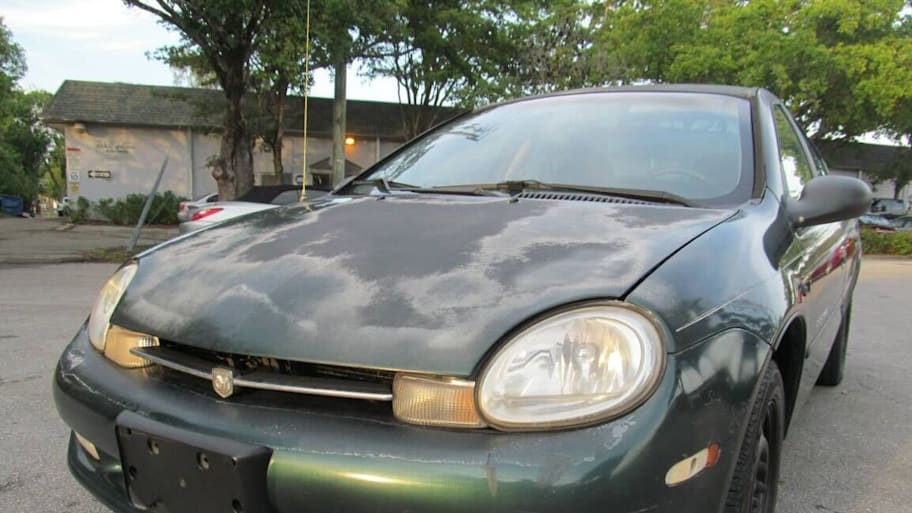
Not Larsen’s. Not that Christmas. He knew of younger linemen on the Dolphins’ practice squad who did not own cars. He also had a friend who worked in car sales. These gifts had a minimum of $1,000. But the friend found an old Dodge Neon from 2000, with peeling forest-green paint, scratches and dents. The price fell below the minimum. But the gift was funny and functional; it could be used after everyone finished laughing.
Other Dolphins would hand over Louis Vuitton duffel bags, Beats headphones and iPads. Larsen gave one of those practice-squad lineman the car, which went viral online and hence its nickname—The S---box.
Larsen’s not alone in his creativity with presents. Peyton Manning sent handwritten letters to retirees, making him the most prolific giver in NFL history. His brother, Eli, gave his Giants linemen custom jeans—anyone laughing at that might want to consider buying pants while 6'5" and 325 pounds. Carson Wentz bought his Eagles linemen customized cowboy boots. Jacoby Brissett, who politely declined an interview request, reportedly baked his O-line cookies while in college at NC State. Carson Palmer gifted custom hot tubs one year and crossbows in another. Larry Fitzgerald upgraded the wardrobe of every Cardinals coach with tailored suits. Saquon Barkley has said he gives his guys a spending limit and allows them to pick whatever gift they’d like.
“I thought it’d be funny to do something memorable,” Larsen says. “And, eight years later, it’s still a thing. So that’s pretty awesome.”
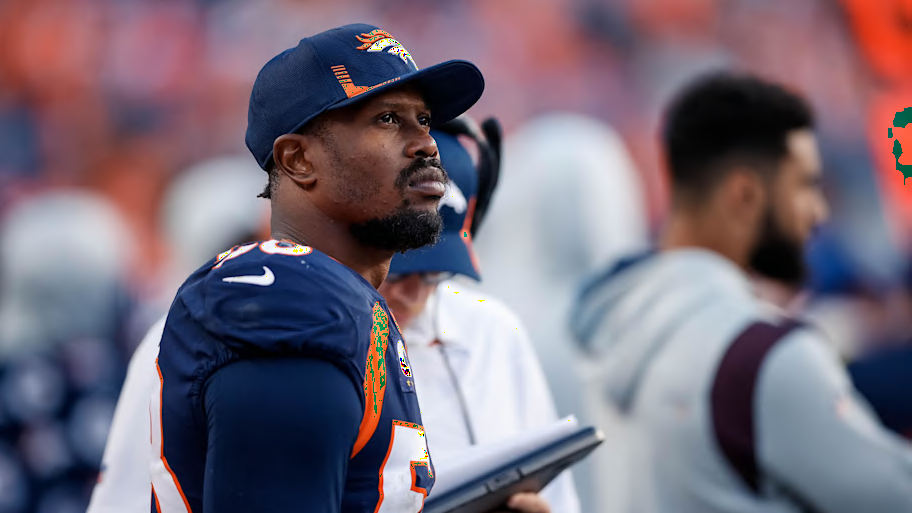
Von Miller ranks among the greatest, most creative sack specialists ever to chase a quarterback. That sentiment applies to his holiday gift giving, too. In 2016, Miller presented wine bottles not only to every member of his Broncos team but also to every player in the AFC West. The division was stacked that season—collective record: 38–26—and Miller wanted to note their shared, not-always-friendly experience through 500-plus wine bottles. Each gift was delivered with a note: “It is an honor and a privilege to take the field and compete with you twice a year.” He then had palettes delivered to players he knew in each locker room for distribution purposes, making this gift a team-beyond-your-team effort.
Now in Washington, Miller had long ago forgotten about those bottles. But one new teammate, Commanders guard Nick Allegretti, had played in Kansas City then. He reminded Miller of that year someone had gifted an entire division. “Those [are] some of the most rewarding, dopest moments,” Miller tells SI. “I’m not taking notes. I’m not keeping track. I’m not keeping score. It’s just … kindness.”
Miller must also confess. NFL gift giving, while altruistic in nature and more thoughtful than often credited, isn’t simply for those O-line “receivers.” The act of giving is also for him. “When it comes to my teammates, I do care,” Miller says. “I care what they think about me. I care about what they say about me when I’m not in the room. I care about how they feel, with me, on the football field.”
Perhaps that additional purpose, tied to self but also to team, culls the creativity that’s all over the modern landscape. In 2015, Miller hooked up each Bronco with whiskey and expensive underwear because, he noted then, that specific brand of undies “increases blood flow in The Area.” He gave out expensive dual-temperature mattresses one year and expensive dual-temperature mattress toppers known as Chilipads in another.
Now in his 15th NFL season and playing for a fourth franchise, Miller is sometimes surprised by how prominent his memories from Denver (2011 to midway through ’21) still are. New ownership group in Denver. New stadium discussion. Soon, a new practice facility. He dreamt about all that as he carried the franchise to its first championship since the Elway days. He sees mementos, photographs, framed jerseys and, yes, gifts—and each transports him—back to that (mostly) glorious decade.
The arms race will never end. In another year, with his close friend, the late Demaryius Thomas, Miller (and DT) paid for a weekend getaway at the Broadmoor Hotel, a five-star, destination resort in Colorado Springs. They invited every person who worked for the Broncos. “Just to show people you, like, genuinely care about them,” Miller says. “And, yeah, I take pride in that.”
As for receiving, though, Miller, like so many of his counterparts, does not select a fancy suitcase, or a tailored suit or a crossbow as his favorites. Anything he might truly desire, Miller says, would be too expensive to expect from anyone in his life. His favorite gift started with a favorite practice—an internet search rabbit hole. He loved to write and took voracious notes in meetings, which he tunneled into scouring videos comparing the best fountain pens late last year. Miller studied the differences in inks across various iterations, along with which types of paper worked best with his favored inks.
His brother, Vins, took notice without saying anything. And, on Christmas, Vins gifted Von a Montblanc—the Hall of Famer of fountain pens. And not just any Montblanc—a Jimi Hendrix Montblanc. It retails for up to $4,700. But Miller could buy 1,000 of them without blinking. What mattered: his brother noticing his interest and helping him explore it. Vins, in other words, gave Von a thoughtful gift.
The best kind.
This out-of-control arms race on gift spending in pro football isn’t likely to end, ever, but especially any time soon. Will future quarterbacks buy future linemen their very own houses? Put linemen’s children through college? Space travel? All seems far-fetched. But so did the current landscape 20 years ago.
As a 37-year-old starter, Stafford hasn’t looked too far ahead. He does give the modern definition of the bar involved. “The box for that is, like, What would you not get yourself?”
Lipert, the giving expert, hears this and says, “It’s all about how [gifts] emotionally connect.” He struggles sometimes around Christmas or other gift-heavy celebrations, when he hears people say that giving no longer matters, that it’s all marketing and there’s no significance. Christmas is approaching, and the nativity is central to how Americans celebrate that holiday. And Lipert says the central element of the pivotal nativity story in the Bible is three kings and the gifts they carried. One, gold coin, was expensive. The other two—frankincense and myrrh—were not. But they symbolized spirituality and mortality, respectively.
Thoughtfulness mattered, even then.
Walker won’t say what he has planned for the follow-up to his viral gift last season.
The S---box, alas, didn’t make it to the intended lineman’s driveway. Another veteran, Mike Pouncey, sped from team headquarters in that battered but functional Neon, without any explanation beyond a cackle. In 2025, The S---box’s whereabouts remain unknown.
The guy with the best kind of Jersey Guy understands this. Walker prefers Secret Santa exchanges to white elephant swaps. “You want to make that gift special, just for that person,” he says. “You want them to know you’re thinking about them. It could be the smallest gift. I see a lot of quarterbacks and running backs, and [how they] do it with the O-line. That’s always awesome. No disrespect.
“But the bar is: be thoughtful.”
More NFL From Sports Illustrated
- How One Turning Point Ignited the Jaguars’ Six-Game Winning Streak
- Jaguars' Trevor Lawrence Is Finally Living Up to the Hype
- Patriots Prove They're Ready for the Postseason Grind With Gutsy Comeback Win
- The Lamar Jackson Era in Baltimore Has Been Glorious—and Unfulfilling
- Updated 2026 NFL Draft Order After Week 16 Slate
This article was originally published on www.si.com as How Elaborate NFL Gift Giving Became an Arms Race.